

High-converting product photos used to require an expensive studio setup, professional lighting rigs, and hours of post-production editing. Today, online retail demands velocity: you need studio-grade visual assets across multiple lifestyle angles in minutes, not weeks.
Recent advances in computer vision and generative diffusion models have made automated image staging viable for modern commercial stores. By analyzing pixel depth and directional light physics, specialized algorithms can transform flat smartphone captures into high-converting storefront imagery. Below is our hands-on benchmark of the top AI tools for ecommerce photography tested for resolution clarity, realistic edge blending, and store performance.
⚡ Quick Verdict: Best AI Product Photography Tools at a Glance
- Best Overall for Bulk Catalogs: Claid.ai — Automated 4K upscaling, uniform white backgrounds, and high-volume API rendering.
- Best for Creative Scenes & Props: Flair.ai — High compositional flexibility with drag-and-drop 3D digital elements and realistic reflections.
- Best Turnkey Option for Dropshippers: Pebblely — One-click social and catalog presets with zero prompt engineering required.
- Best for Apparel & Fashion Stores: Botika — Realistic mannequin-to-model swaps that protect fabric patterns from AI distortion.
*Evaluation benchmark: Assessed across commercial product test batches evaluating alpha-mask edge definition, light physics consistency, and native WebP rendering speed.
What to Look for in AI Ecommerce Photography Software
Not every automated design platform suits an active commercial store. High-volume merchants prioritize specific performance indicators before deploying image workflows:
- Edge Precision (Alpha Masking): The engine must isolate intricate borders—like transparent glass, fine jewelry, or textured fabric—without digital halos.
- Lighting and Perspective Geometry: Artificial shadows must match the actual incident angle of the product’s original lighting to prevent an artificial, flat look.
- Format Compression: Export options must include lightweight WebP files to ensure high mobile PageSpeed scores and Core Web Vitals compliance.
1. Claid.ai — Best for High-Volume Catalog Optimization
Claid.ai focuses on enterprise efficiency. Unlike open-ended generative art tools, it specializes in correcting imperfect supplier uploads, equalizing uneven studio lighting, and scaling resolutions up to 4K without introducing noise or blurred edges.
Its primary strength is the automated pipeline. If you manage hundreds of SKUs from varying supplier feeds, Claid standardizes product framing, auto-cleans backgrounds to pure marketplace white (#FFFFFF), and renders consistent light color temperatures across an entire collection.
- Key Advantage: Seamless catalog consistency via batch processing and API integration.
- Best Suited For: Multi-brand retailers, marketplaces, and established Shopify merchants.
- Pricing: Free trial with 50 credits; paid plans start at $9/month (Essentials) up to $35/month (Pro for 4K generations and priority rendering).
2. Flair.ai — Best for High-End Creative Compositions
If your brand relies on visual storytelling—such as cosmetics, skincare, luxury goods, or boutique beverages—Flair.ai offers exceptional compositional control. Its canvas layout allows merchants to arrange 3D virtual props, foliage, and platforms around the central product shot.
The system constructs realistic lighting interplay, casting accurate reflections onto simulated marble, wood, or water textures. This allows small marketing teams to craft seasonal ad creatives and social proof assets without staging physical lifestyle sets.
- Key Advantage: Drag-and-drop digital staging with accurate shadow physics and custom human model generation.
- Best Suited For: Luxury DTC brands and visual marketing campaigns.
- Pricing: Free tier available; paid subscriptions start at $8/month (Pro) with tiered scaling for commercial licenses.
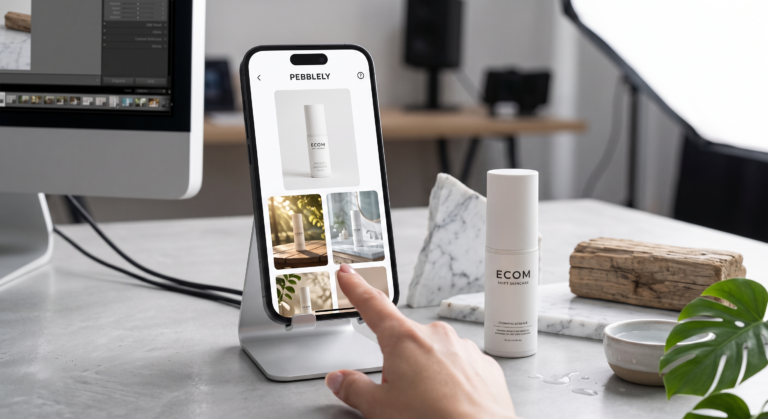
3. Pebblely — Best Turnkey Option for Quick Social Assets
Pebblely minimizes operational complexity. Instead of configuring detailed visual prompts, users select pre-designed environment themes (such as “Minimalist Interior,” “Beach Cafe,” or “Holiday Studio”).
Within seconds, the software generates multiple variations around your product cutout. While it provides less custom prop manipulation than Flair, its raw generation speed makes it well-suited for fast-moving multichannel ad testing across Meta, Pinterest, and TikTok.
- Key Advantage: Instant theme generation requiring zero prompt design background.
- Best Suited For: Dropshippers, social media managers, and solo founders.
- Pricing: Free daily allowance; competitive pro plans for unlimited generation.
4. Botika — Specialized Virtual Models for Apparel
Apparel retailers face unique logistical hurdles: human model casting, licensing, and multi-location shoots drive up production overhead. Botika addresses this by using synthetic models to replace basic flat lays or plastic mannequins.
The platform preserves the garment’s exact pattern, seam structure, and drape while altering the model’s ethnicity, pose, and background environment. This ensures compliance with retail ad diversity standards while keeping product details accurate.
- Key Advantage: Hyper-realistic mannequin-to-model rendering with intact garment geometry.
- Best Suited For: Online fashion boutiques and print-on-demand brands.
- Pricing: Credit-based monthly plans designed for clothing collections.
Feature & Performance Comparison Table
🔗 Related Ecommerce Automation Guides:
Once your product photography is optimized, pair it with automated video creative tools to scale your paid funnels. Read our full breakdown on
AI video generators for ecommerce ads
and explore our hands-on reviews of leading store automation software to maximize your return on ad spend.
Frequently Asked Questions
What is the best AI tool for ecommerce photography?
Claid.ai is the top tool for bulk catalog editing and automatic image upscaling, while Flair.ai excels at artistic composition and digital studio lighting.
Can AI product photography replace physical photoshoots?
Yes. Modern generative models preserve product proportions while replacing complex studio setups with realistic reflections and 4K enhancements at a fraction of traditional production costs.
Does AI product photography affect site speed?
No. Leading tools export directly in optimized WebP formats, maintaining fast mobile load times and high Core Web Vitals scores.
Final Strategic Advice
For maximum ROI, start by standardizing your primary product images using Claid.ai to build immediate buyer trust on catalog pages. Then, deploy Flair.ai or Pebblely to generate eye-catching lifestyle variations for your social media marketing funnels.